
Polemonium pectinatum, commonly known as Washington Jacob’s-ladder, is a rare perennial herb endemic to Washington State, meaning it occurs nowhere else in the world (Washington Natural Heritage Program [WNHP], 2024). This plant is restricted to the Columbia Basin shrubsteppe, particularly in Douglas, Franklin, Grant, and Walla Walla counties (WNHP, 2024; U.S. Fish & Wildlife Service [USFWS], 2022). It thrives in seasonally moist meadows and swales within otherwise arid sagebrush-steppe ecosystems.
“How many flowers fail in wood
— Emily Dickinson, Poem 937
Or perish from the hill—
Without the privilege to know—
That they are beautiful—”
Description
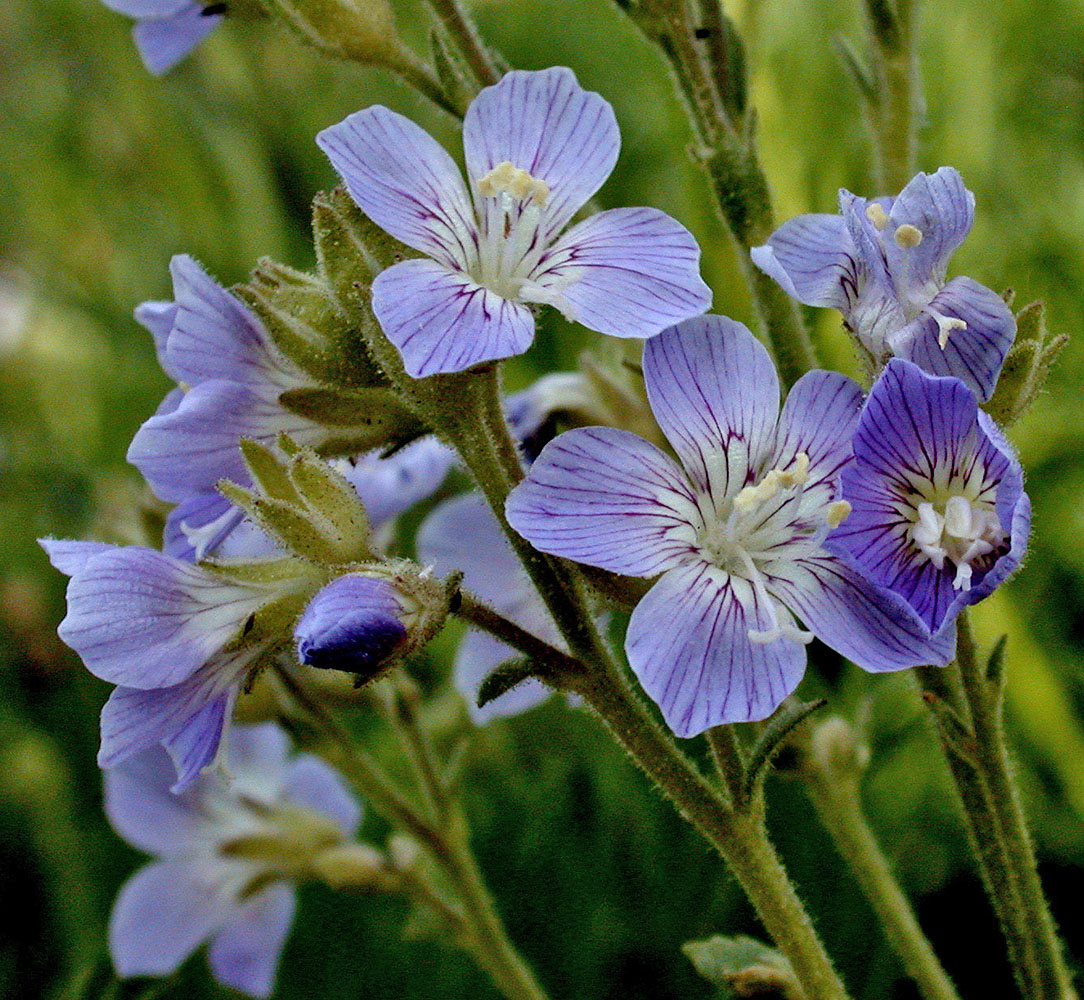
Washington Jacob’s-ladder is characterized by tall, hollow stems reaching up to about 3 feet (1 meter) in height, and pinnately compound leaves with narrow, linear to lance-shaped leaflets that give it a fine-textured appearance (Abrams & Ferris, 1951). Its bell-shaped flowers range from pale blue to lavender, arranged in loose clusters, each with five petals and prominent yellow stamens.
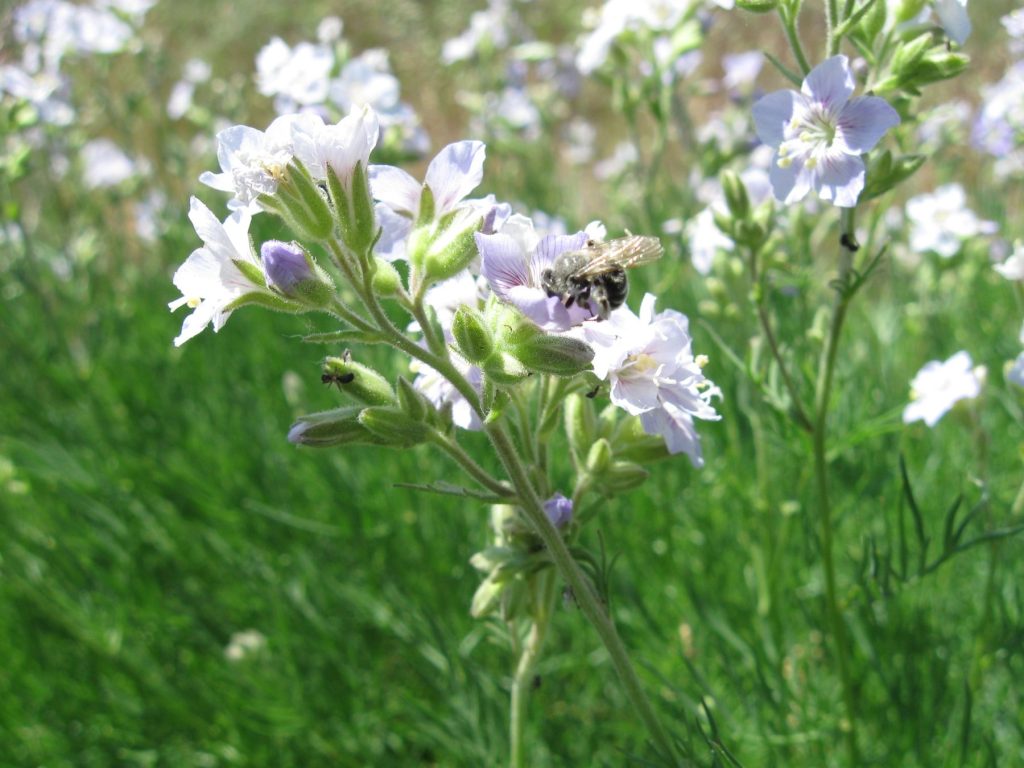
Floral: Bell-shaped, pale blue to lavender flowers clustered loosely at stem tips. Flowers have five petals and prominent yellow stamens (Abrams & Ferris, 1951). Bloom period typically in spring to early summer (Washington Natural Heritage Program, 2021).
Leaves: Pinnately compound leaves arranged alternately. Each leaf consists of many narrow, linear to lance-shaped leaflets, giving a finely dissected or fern-like appearance (Abrams & Ferris, 1951).
Stems: Erect, slender, and hollow stems; often unbranched or sparingly branched (Abrams & Ferris, 1951).
Root: Fibrous root system typical of herbaceous perennials, anchoring in moist soils of shrubsteppe habitats (Washington Natural Heritage Program, 2021).
Status
Due to its extremely limited distribution and habitat fragmentation, P. pectinatum is listed as Endangered by Washington State and has federal conservation status under review (WNHP, 2024; USFWS, 2022). Conservation efforts focus on protecting existing habitat and managing threats such as invasive species, grazing, and land conversion.
State
Threatened
🔶
North America
Impreriled
🔶
Global
NOT LISTED
⚪
***** Status References: WA State: WA-DNR North America: NatureServe Global: IUCN Red List *****
Threats
Washington Jacob’s ladder (Polemonium pectinatum) is a rare, state-endemic wildflower increasingly threatened by habitat loss and ecological disruption. Its native range is limited to seasonally wet meadows and riparian areas of central Washington, which have been heavily altered by agricultural conversion, livestock grazing, and hydrological changes such as ditching and water diversion (Washington Natural Heritage Program, 2021). Invasive species—including cheatgrass (Bromus tectorum) and other aggressive non-natives—pose additional pressure by outcompeting native flora and altering fire regimes (Gamon, 1991). Another critical but often overlooked threat is the decline of native pollinators, which are essential for the plant’s reproduction. Habitat fragmentation and pesticide use have reduced the presence of key insect pollinators in many regions, further challenging the survival of small, isolated plant populations (Gamon, 1991). Because this species occupies a narrow ecological niche and has only a handful of small populations, even minor disturbances—whether to the land or its pollinators—can severely impact its viability. Long-term conservation efforts are essential to maintain these fragile habitats and prevent extirpation.
Conservation
In Washington, conservation efforts for Washington Jacob’s ladder (Polemonium pectinatum) are focused on habitat protection, monitoring, and research. The Washington Natural Heritage Program works with landowners and local agencies to preserve remaining populations, many of which exist on private land or in areas threatened by development and invasive species (Washington Natural Heritage Program, 2021). Recovery plans emphasize maintaining native plant communities, managing grazing, and preventing hydrologic disruption (Gamon, 1991). For the everyday person, helping native plants thrive can be as simple as supporting local conservation groups, choosing pollinator-friendly gardens, or learning more about the rare species that share your region. Every small effort contributes to protecting the unique biodiversity of Washington’s shrinking meadow ecosystems.
Can I Plant Washington Jacob’s Ladder in My Yard?
While the idea of growing endangered native plants in home gardens is appealing, Washington Jacob’s ladder (Polemonium pectinatum) is not commercially available and shouldn’t be planted outside its natural range. As a state-listed endangered species with highly specific habitat needs—seasonally wet meadows in central Washington—this plant depends on a delicate balance of soil, hydrology, and native species interactions that are nearly impossible to replicate in typical yards (Gamon, 1991). Additionally, cultivating it without permits could risk harming wild populations. Instead, gardeners can support biodiversity by planting more common native species, such as Polemonium reptans (Jacob’s ladder), and by creating pollinator-friendly spaces that benefit the broader web of life these rare plants depend on. Every backyard can become a small refuge for the wild.
Nature Art
The Washington Jacob’s ladder is brought into focus through both historical botanical illustration and contemporary field observation. It features Polemonium pectinatum Greene—Washington polemonium—shown in Fig. 3888 from An Illustrated Flora of the Pacific States (Abrams & Ferris, 1951), which captures the species with precise scientific clarity. This is paired with a 2025 field sketch by Smith, created in watercolor and pencil, reflecting direct observation in habitat. Together, the two works highlight a dialogue between classic botanical documentation and modern nature journaling, emphasizing both accuracy and lived experience in understanding this Washington-endemic plant.
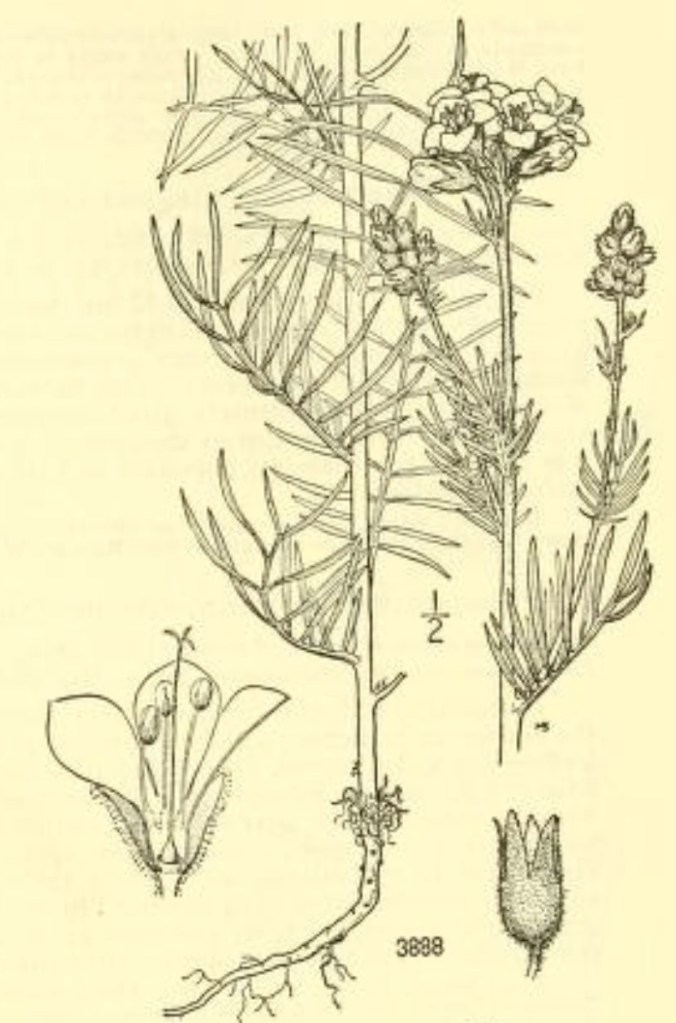
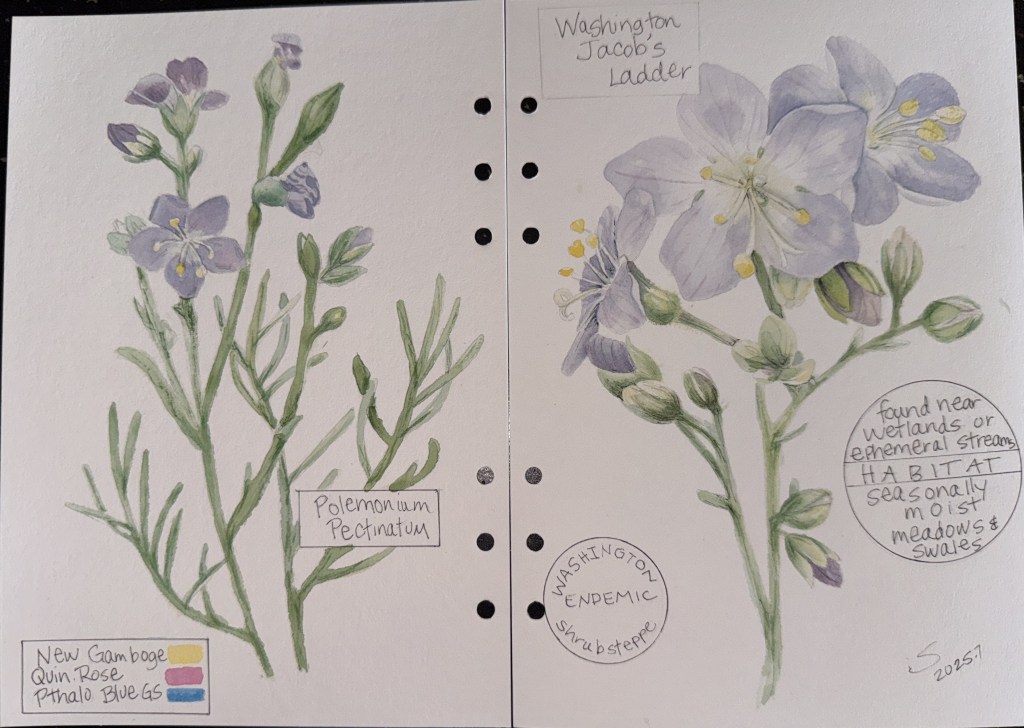
Cover art credit: Jacob’s ladder (Siegella, 2022, August 26)
References
Click here to view the references used for this post
Abrams, L. R., & Ferris, R. S. (1951). An illustrated flora of the Pacific States: Washington, Oregon, and California (Vol. 3, p. 397, 399) [Illustration]. Stanford University Press. Retrieved June 23, 2025, from https://www.biodiversitylibrary.org/page/5514785
Eastern Washington University. (2019). Polemonium pectinatum [Photograph]. Flora of Eastern Washington and Adjacent Idaho. Retrieved June 23, 2025, from https://in.ewu.edu/ewflora/wp-content/uploads/sites/275/2019/12/polemoniaceae_pol-pec1-fsf.jpg
Gamon, J. G. (1991). Report on the status of Polemonium pectinatum (Washington polemonium). Washington Natural Heritage Program. Retrieved June 23, 2025, from https://www.dnr.wa.gov/publications/amp_nh_polemonium_pectinatum.pdf
McCracken, B. (2023). Washington polemonium (Polemonium pectinatum) with pollinator [Photograph].In Plant Spotlight: Washington Polemonium blog. Retrieved June 23, 2025, from https://botanicgardens.uw.edu/about/blog/2023/04/13/plant-spotlight-washington-polemonium/
NatureServe. (n.d.). Polemonium pectinatum (Washington polemonium). In NatureServe Explorer. Retrieved June 23, 2025, from https://explorer.natureserve.org/Taxon/ELEMENT_GLOBAL.2.156567/Polemonium_pectinatum
Siegella. (2022, August 26). Jacob’s ladder [Photograph]. Pixabay. Retrieved from https://pixabay.com/photos/jacobs-ladder-greek-valerian-7410808/
Smith, I. (2025). Washington Jacob’s-ladder botanical field sketch [Illustration]. Shared with permission.
U.S. Fish & Wildlife Service. (2022). Species status assessment for Polemonium pectinatum (Washington Jacob’s-ladder). Retrieved June 23, 2025, from https://ecos.fws.gov/ecp/species/9151
Washington Natural Heritage Program. (2021). Washington Jacob’s ladder – Polemonium pectinatum. In NatureServe Explorer. Retrieved June 23, 2025, from https://explorer.natureserve.org/Taxon/ELEMENT_GLOBAL.2.156567/Polemonium_pectinatum
Washington Natural Heritage Program. (2024). Field guide to the rare plants of Washington: Polemonium pectinatum. Washington Department of Natural Resources. Retrieved June 23, 2025, from https://www.dnr.wa.gov/natural-heritage

 wild sprout
You must be logged in to post a comment.