
Summary
The grizzly bear (Ursus arctos horribilis) is a subspecies of the brown bear native to North America. Known for its massive size, distinctive shoulder hump, and powerful claws, grizzlies are apex predators and keystone species, playing a critical role in ecosystem health by dispersing seeds, influencing prey populations, and shaping habitats (WDFW, n.d.-a). Historically, grizzlies ranged across much of Washington, but today they are extremely rare, existing primarily in isolated populations near the North Cascades and in neighboring Idaho and Montana (WDFW, n.d.-a; USFWS, 2023).
“The grizzly bear is a lord of the mountains. He has no rival in sheer strength, no fear, and no master in his own domain.”
–Theodore Roosevelt, early 1900s
Description
Grizzly bears are easily recognized by their distinctive concave facial profile, prominent shoulder hump, and long, curved claws used for digging roots, dens, and small mammals. Their fur ranges from dark brown to blond, often tipped with lighter shades that create the species’ characteristic “grizzled” appearance (NatureServe, 2024). Grizzlies are omnivores, feeding on berries, roots, insects, salmon, small mammals, and carrion. They thrive in diverse habitats such as dense forests, subalpine meadows, and river valleys that provide both food and cover (WDFW, n.d.-a).
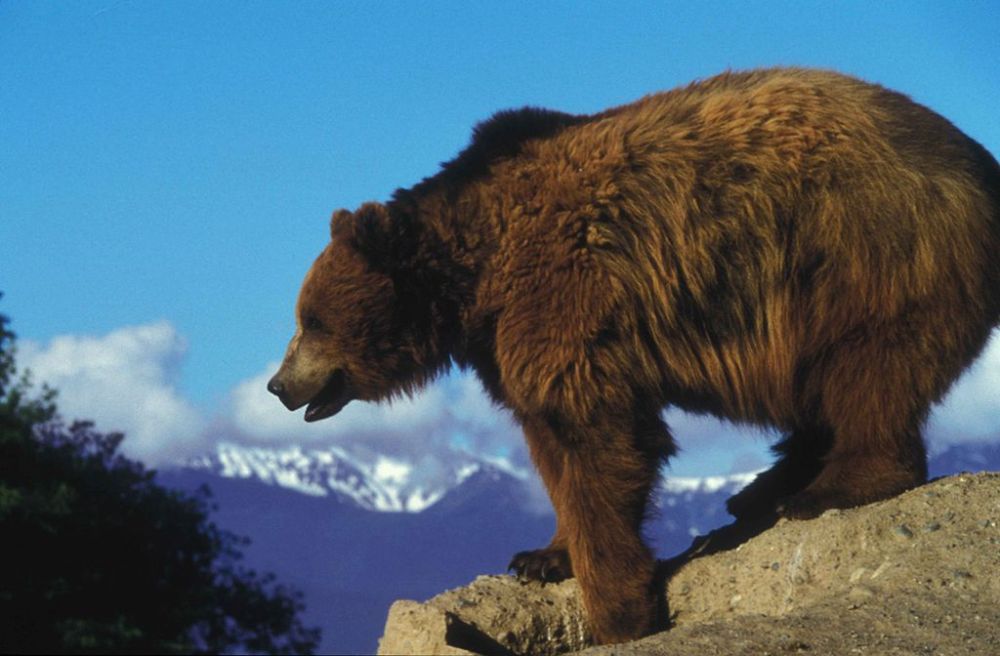
The species also shows strong sexual dimorphism—adult males are typically 1.5 to 2 times larger than females. Males usually weigh between 400–600 pounds, though in rich habitats they may exceed 800, while females generally range from 250–400 pounds. In addition to size, males tend to have broader heads and more robust shoulders, though both sexes share the signature hump and formidable claws (Servheen, Herrero, & Peyton, 1985). This size difference influences dominance, mating behavior, and territorial defense.
| Male | Female | |
| Weight | 400 to 790 pounds (180–360 kg) | 290 to 400 pounds (130–180 kg) |
| Height on hind legs | 8 feet (2.4 meters) | 6.5 feet (2 meters) |
| Height on all fours | 3.5 to 4 feet (1 to 1.2 meters) | 3 to 3.5 feet (0.9 to 1.1 meters) |
Status
Grizzly bears are federally listed as Threatened under the Endangered Species Act in the lower 48 states. In Washington, they were long considered extirpated, with only occasional sightings suggesting transient individuals from Idaho or Canada (WDFW, n.d.-a; USFWS, 2023). Habitat fragmentation, human-bear conflict, and historical overhunting contributed to their disappearance.
State
Endangered
🔶
North America
Secure
🟢*
Global
Least Concern →
🟢*
***** Status References: WA State: WDFW North America: NatureServe Global: IUCN Red List *****
Recent Reintroduction Efforts
In April 2024, the U.S. Fish and Wildlife Service (USFWS) and National Park Service (NPS) announced a plan to actively restore grizzly bears to the North Cascades ecosystem in Washington (USFWS, 2024; NPS, 2024). The program involves translocating three to seven bears per year over five to ten years, with a goal of establishing an initial population of about 25 bears in the U.S. portion of the North Cascades, which spans roughly 9,800 square miles. The long-term objective is to restore a self-sustaining population of approximately 200 bears within 60 to 100 years (USFWS, 2024; AP News, 2024).
Although the project has faced delays due to political changes and administrative turnover, conservation groups and local advocates continue to push for the restoration, emphasizing the ecological and cultural importance of grizzlies in Washington (SFGate, 2024; Conservation Northwest, n.d.).
Washington’s Conservation Efforts
In addition to the reintroduction, ongoing efforts aim to protect existing habitat and support coexistence:
- Legal protections: Hunting and harassment of grizzly bears is prohibited throughout Washington (WDFW, n.d.-a).
- Habitat management: Recovery areas in the North Cascades are managed to minimize human disturbance and maintain corridors connecting populations in Washington, Idaho, and Canada (WDFW, n.d.-a; USFWS, 2024).
- Monitoring: Remote camera traps, genetic sampling, and GPS tracking help track bear movements and detect recolonization (USFWS, 2023; USFWS, 2024).
- Public education: Programs teach citizens how to secure food, garbage, and livestock to prevent conflict (WDFW, n.d.-b).
- Recovery planning: Agencies coordinate habitat restoration and long-term population management across the region (USFWS, 2024).
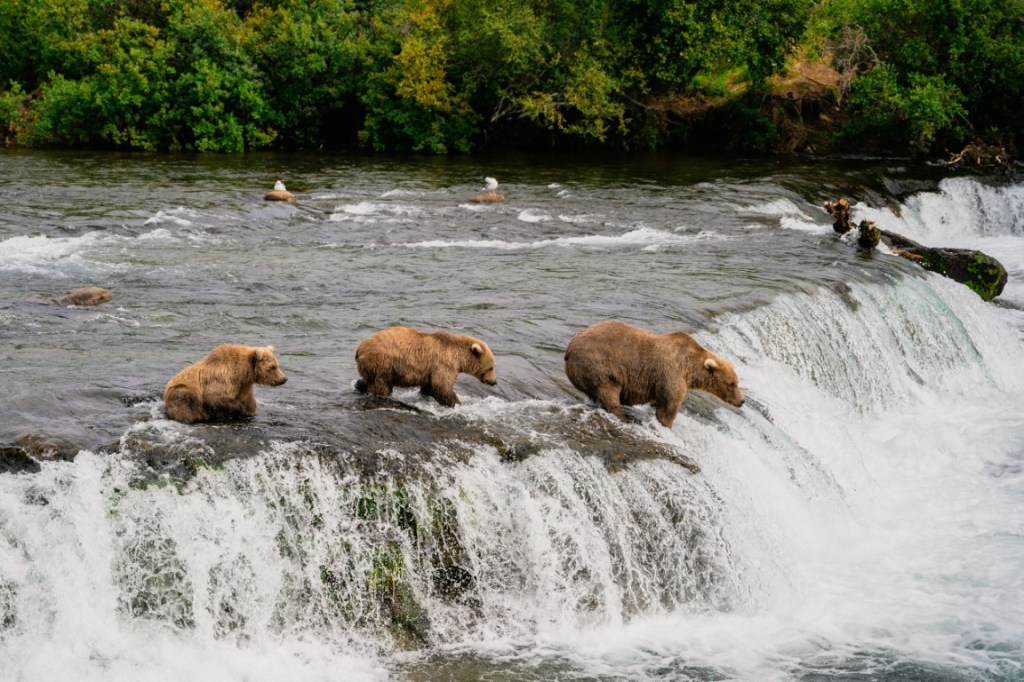
Protecting Washington’s Grizzly Bears
Even if you never encounter a grizzly, you can contribute to their recovery. Securing garbage, removing attractants such as bird feeders during bear season, keeping pets safe, reporting sightings to WDFW, and supporting habitat conservation all help reduce human-bear conflicts. Sharing information and raising awareness through art or education also strengthens community engagement in restoring this iconic species. Small, local actions ripple outward, helping ensure that grizzly bears once again roam Washington’s wild landscapes.
Nature Art
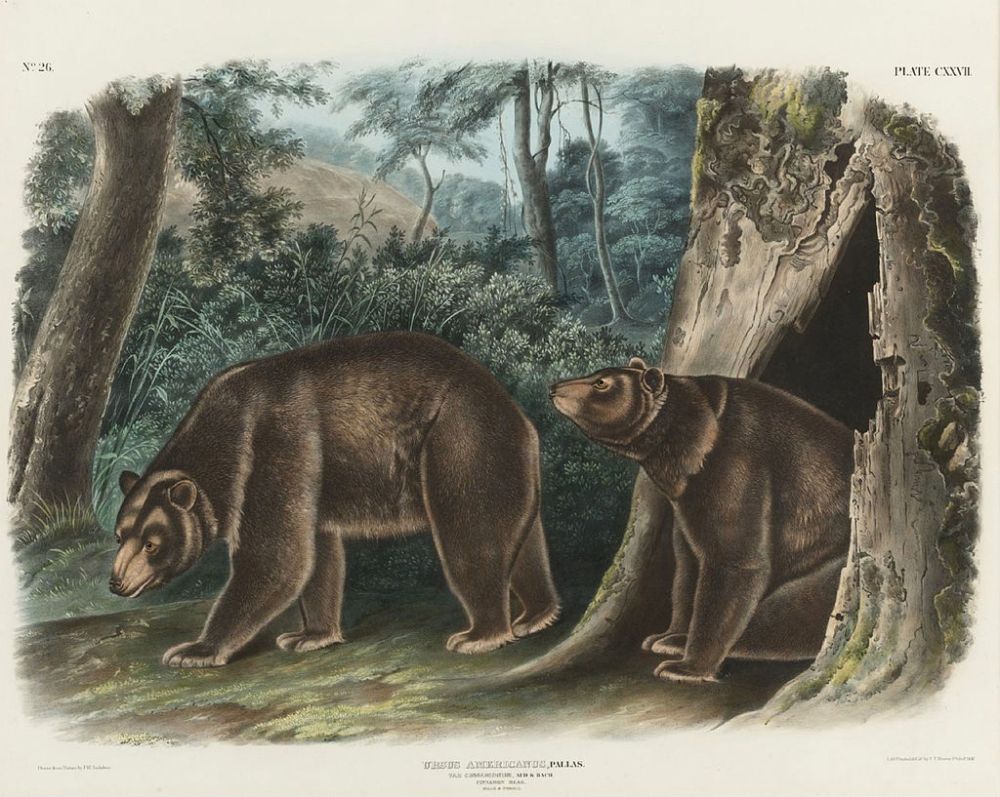
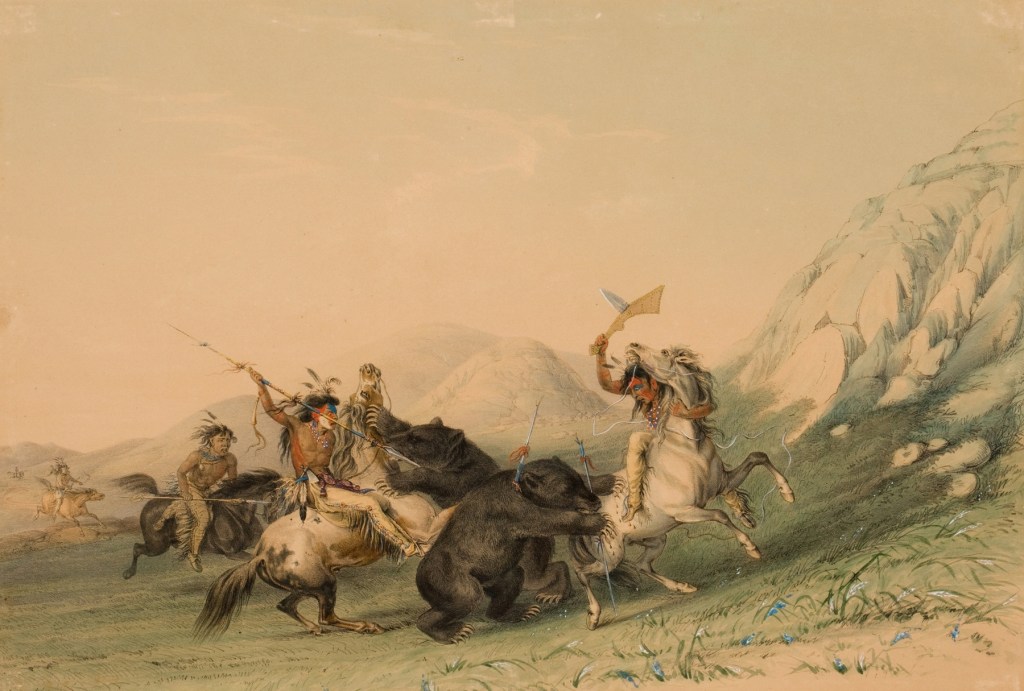
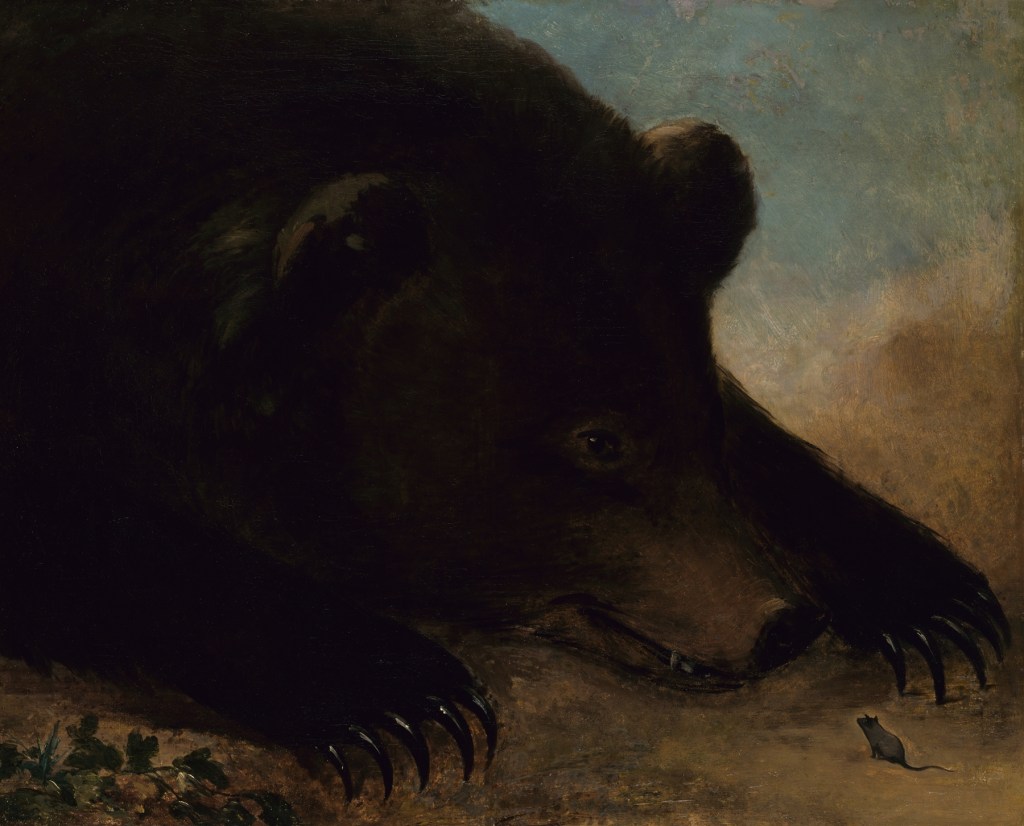
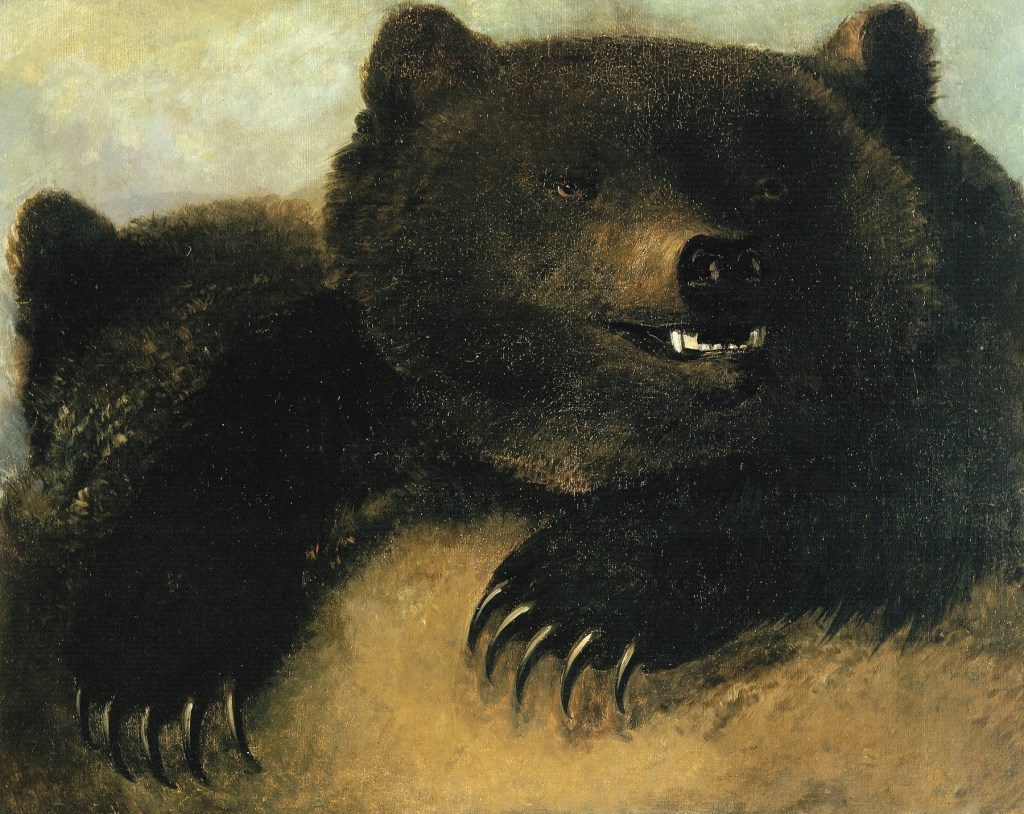
These 19th-century artworks by John Woodhouse Audubon and George Catlin reflect both scientific curiosity and artistic interpretation of the grizzly bear. Audubon’s Ursus ferox, Grizzly Bear. Males (1848) presents two imposing bears rendered in lifelike detail, blending natural history with dramatic presence. Catlin’s Attacking the Grizzly Bear (1844) captures the tension of a violent encounter between indiginous hunters and bear, emphasizing frontier danger. In contrast, Portraits of a Grizzly Bear and Mouse, Life Size (1846–1848) reveals Catlin’s fascination with scale and direct observation, while Weapons and Physiognomy of the Grizzly Bear (1846–1848) examines the bear’s physical traits with a near-anatomical gaze. Together, these works chart shifting perceptions of wildness, fear, and respect for the grizzly in early American art.
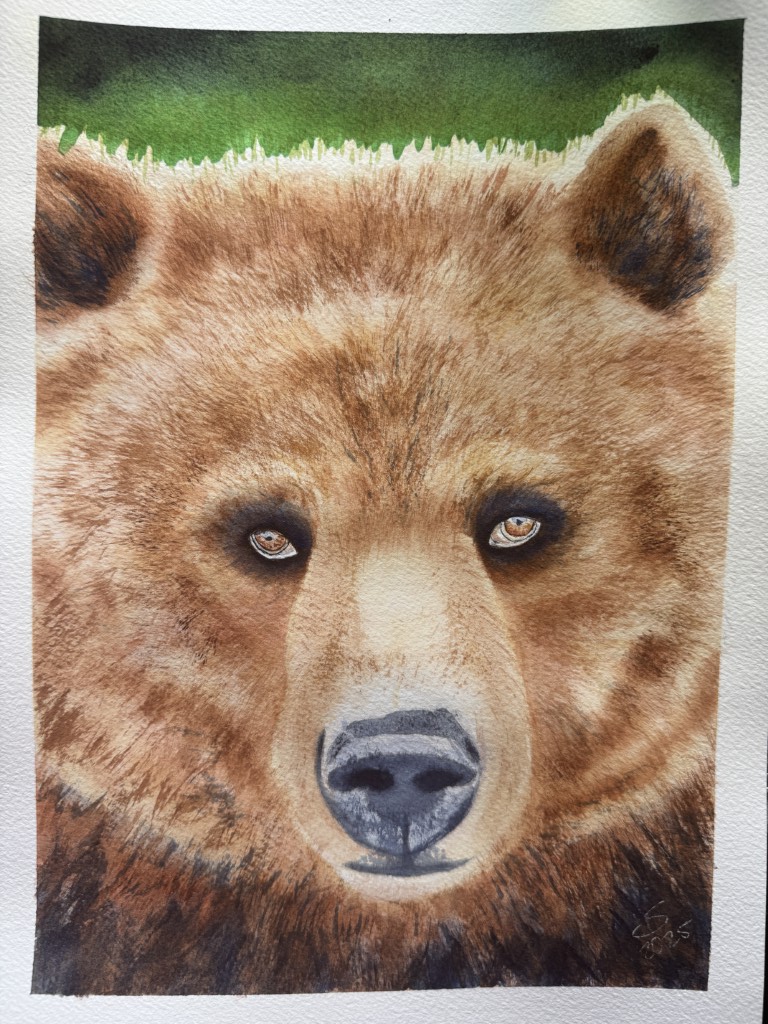
Smith’s (2025) portrait of a grizzly bear captures the animal’s powerful presence through its intense, watchful eyes and thick, textured fur. Set against a soft green backdrop suggestive of forest or meadow in the northern reaches of Washington, the painting highlights both the wildness and quiet majesty of this iconic species.
Cover photo credit: Grizzly Bear (Conger, 2010)
References
Click here to view all of the references used for this post
AP News. (2024). Grizzly bear restoration plan in North Cascades aims to rebuild population. Retrieved August 23, 2025, from https://apnews.com/article/16f06ee71d7955124037b4354b9effae
Audubon, J. W. (1848). Ursus ferox, Grizzly Bear. Males [Lithograph with watercolor]. In J. T. Bowen (Lithographer), The viviparous quadrupeds of North America (Plate CXXXI). Amon Carter Museum of American Art.
Bauer, E., & U.S. Fish and Wildlife Service. (n.d.). Grizzly bear on a rock overlooking [Photograph]. Public domain, via Wikimedia Commons. Retrieved March 19, 2025, from https://commons.wikimedia.org/wiki/File:Grizzly_bear_on_a_rock_overlooking.jpg
Catlin, G. (1844). Attacking the Grizzly Bear, No. 19 [Hand‑colored lithograph]. In The North American Indian Portfolio. London: G. Catlin.
Catlin, G. (1846–1848). Portraits of a grizzly bear and mouse, life size [Oil on canvas]. Smithsonian American Art Museum.
Catlin, G. (1846–1848). Weapons and physiognomy of the grizzly bear [Oil on canvas]. Smithsonian American Art Museum.
Conger, K., NPS. (2010). Grizzly Bear [Photograph]. Public domain. Retrieved March 19, 2025, from https://www.flickr.com/photos/denalinps/6968121996/
Conservation Northwest. (n.d.). North Cascades grizzly bear restoration. Retrieved August 23, 2025, from https://conservationnw.org/our-work/wildlife/northcascadesgrizzly/?utm_source=chatgpt.com
McLellan, B. N., Proctor, M. F., Huber, D., & Michel, S. (2016). Ursus arctos horribilis (North American grizzly bear). In The IUCN Red List of Threatened Species 2016 (Version 2016-3). International Union for Conservation of Nature. Retrieved June 6, 2025, from https://www.iucnredlist.org/species/41688/121229971
Nayak, P. (2021). Mother teaches her cubs how to fish from the lip of Brook’s Falls for upstream salmon [Photograph]. Unsplash. Public Domain under Unsplash license. Retrieved June 22, 2025, from https://unsplash.com/photos/a-group-of-brown-bears-standing-on-top-of-a-waterfall-21fFzg-8MM8
NatureServe. (n.d.). Ursus arctos (brown bear). NatureServe Explorer. Retrieved June 6, 2025, from https://explorer.natureserve.org/Taxon/ELEMENT_GLOBAL.2.102187/Ursus_arctos
Servheen, C., Herrero, S., & Peyton, B. (1985). Size and growth patterns of the Yellowstone grizzly bear (U.S. Geological Survey Publication No. 70121509). U.S. Geological Survey. Retrieved June 6, 2025, from https://pubs.usgs.gov/publication/70121509
U.S. Fish and Wildlife Service/USFWS. (2023). Grizzly bear (Ursus arctos horribilis) recovery in the lower 48 states. Retrieved August 23, 2025, from https://www.fws.gov/species/grizzly-bear-ursus-arctos-horribilis
U.S. Fish and Wildlife Service/USFWS. (2024). North Cascades grizzly bear restoration. Retrieved August 23, 2025, from https://www.fws.gov/project/north-cascades-grizzly-bear-restoration?utm_source=chatgpt.com
Washington Department of Fish & Wildlife. (n.d.-a). Grizzly bear (Ursus arctos horribilis). Retrieved August 23, 2025, from https://wdfw.wa.gov/species-habitats/species/grizzly-bear
Washington Department of Fish & Wildlife. (n.d.-b). Living with bears: Tips for coexistence in Washington. Retrieved August 23, 2025, from https://wdfw.wa.gov/species-habitats/species/living-with-bears
Williams, K. (2010). Grizzly Bear [Photograph]. CC BY 2.0, via Wikimedia Commons. Retrieved March 19, 2025, from https://flickr.com/photos/46306125@N03/4464643080
Wolf, J. (1862–1867). The Grizzly Bear [Illustration]. Artvee. Retrieved August 23, 2025, from https://artvee.com/dl/the-grizzly-bear/

 wild sprout

You must be logged in to post a comment.