

After several years of keeping bees at our Bellevue farm with only mild success overwintering, we decided it was time to try something new. We wanted to clarify if environmental factors were hindering our bees’ health, outweighing the natural beekeeping practices that we used. After all, the current apiary was directly under the eastside powerlines. Also, the property was less than half a mile from the Bellevue Golf Course, which was sure to be using pesticides. Perhaps a new apiary would help us.
What is now proved was once only imagined.
—William Blake
After many months of searching, we finally managed to lease a slice of property with a local nonprofit, SnoValley Tilth. This property is situated in the fertile Snoqualmie Valley, a location that has long been an agricultural district whose farmers supply fresh goods to the greater Seattle area. Our bees would help the farmers by pollinating crops and conversely, our bees would benefit from this biodiverse ecosystem. The only hurdle was the seasonal flooding. The apiary was planned to be constructed near the Snoqualmie River. This area was once a “100-year” flood plain and now, due to climate change, it generally floods annually.
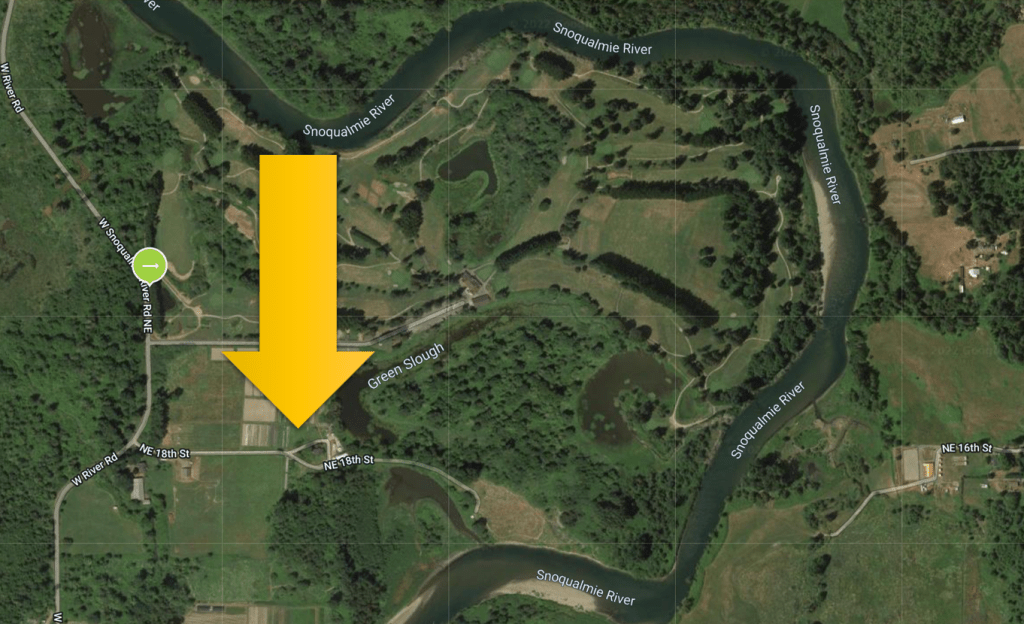
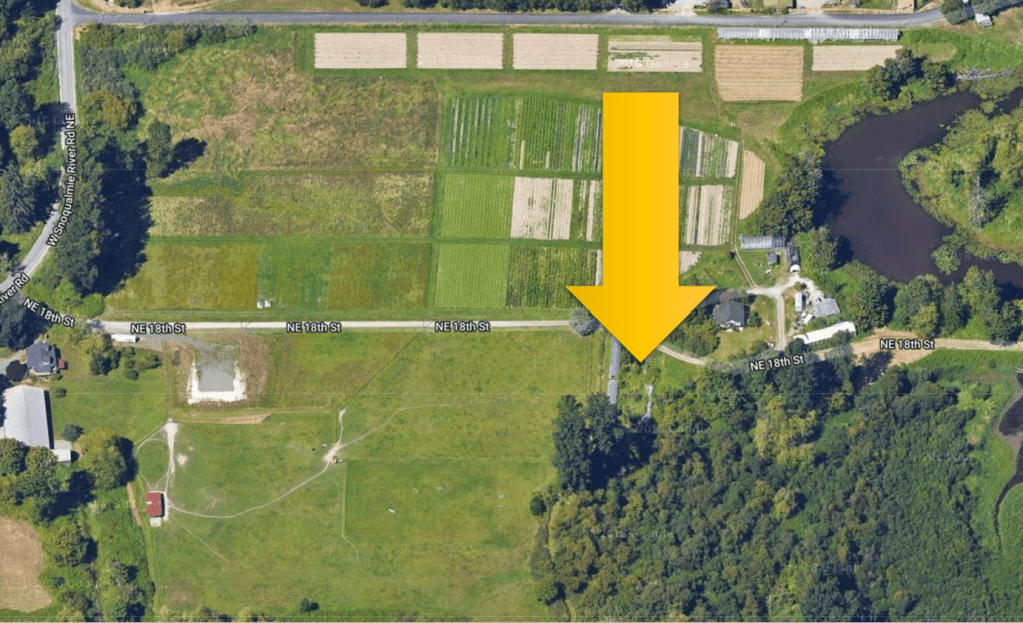
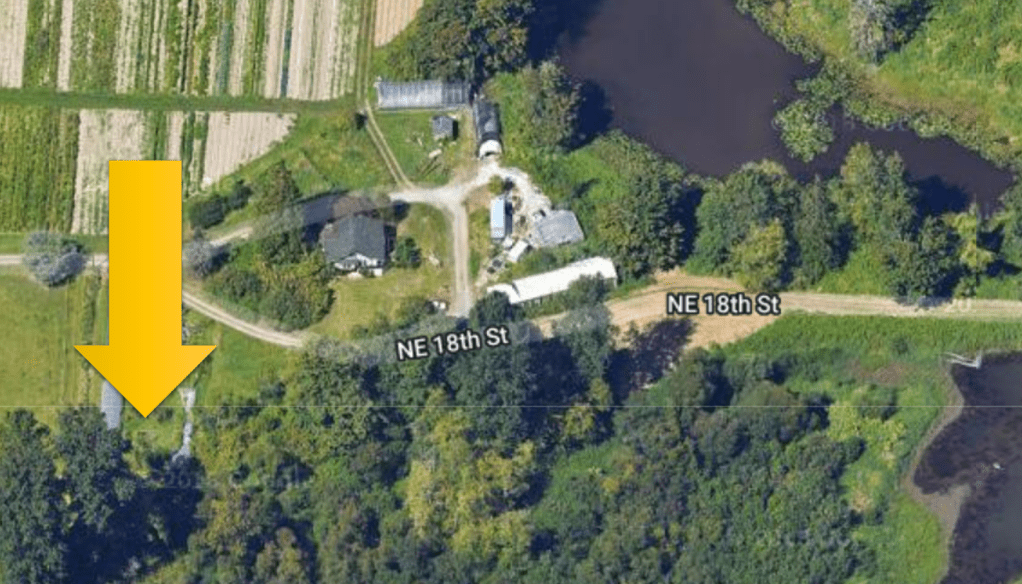
Birds-eye view(s) of our Carnation Apiary
Scroll through these pictures to understand the new apiary’s location. See how it is nestled next to the Snoqualmie River and the Green Slough. (Area maps from Google.com, 2022)
Build Your Own
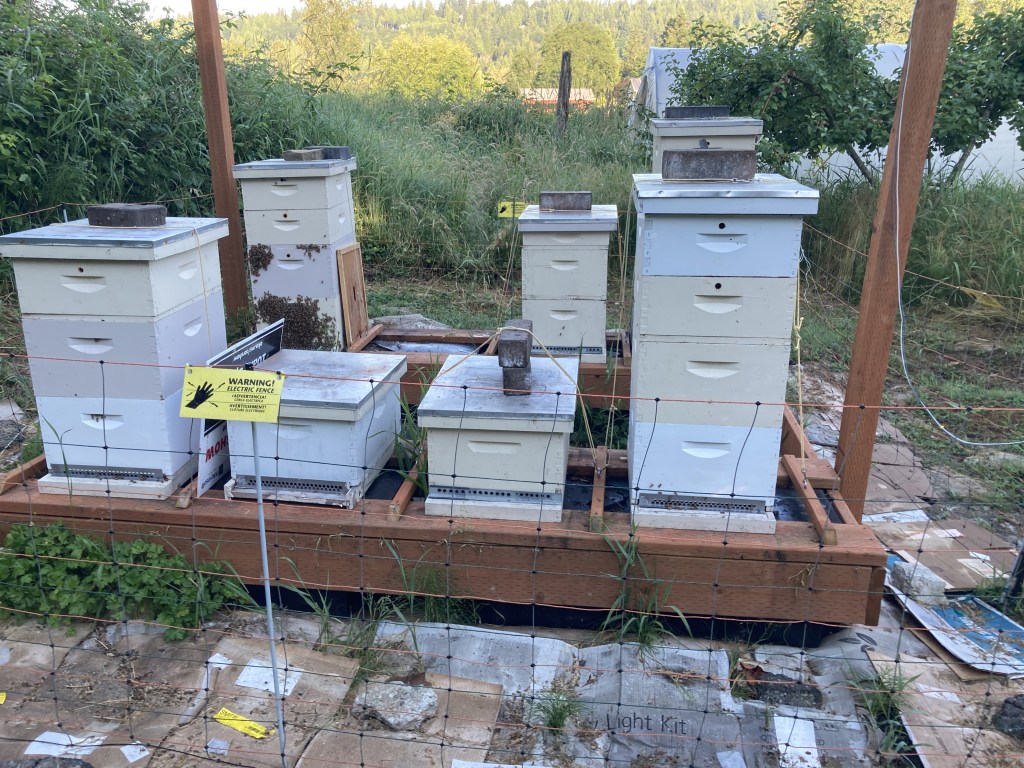
Taking inspiration from Florida beekeepers who regularly relocate bees on the Apalachicola River to the precious tupelo blossoms via barges, our treasurer and chief architect drew up plans to build us an ergonomic apiary that floats. The apiary was not designed as a barge to float down a river, but rather to float and save our hives. To get started, we assumed eight hives, with full weight of a winter hive is, at most, 70 pounds each (rainy season is in the winter when the hives are much lighter than summer hives are). So, this was our starting point–better to be over-engineered for our first test.
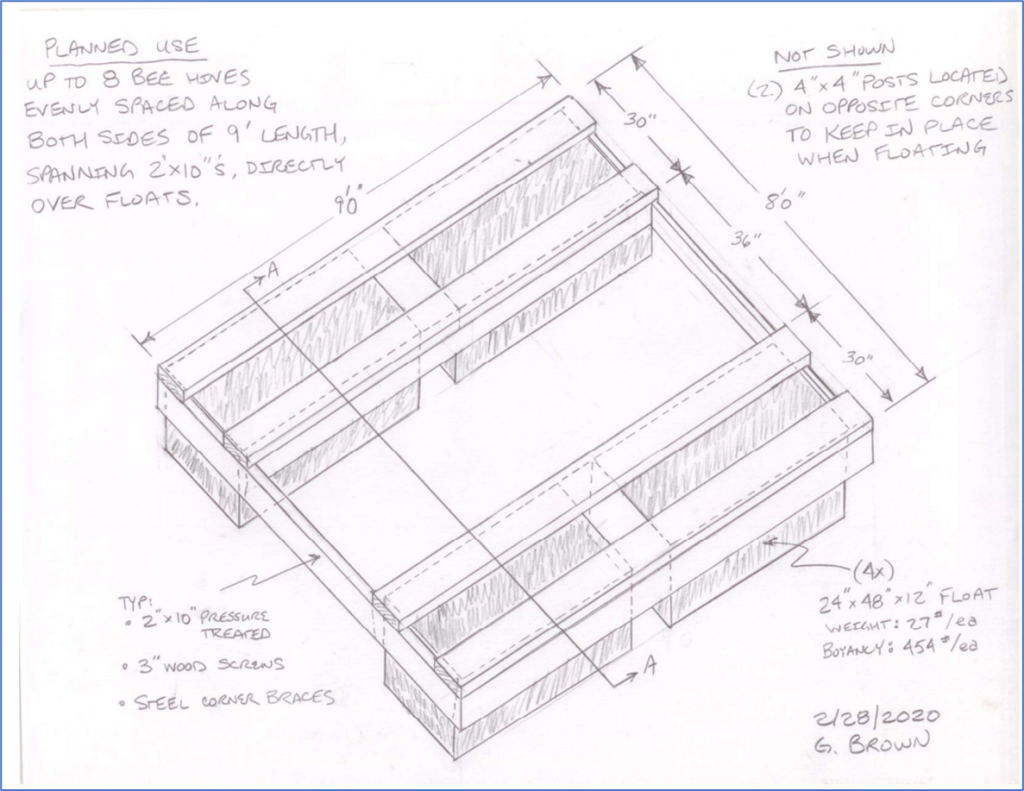

The apiary was optimized for me, the Wild Sprout beekeeper (height 5’6″), so that I could easily place and pull up to three honey supers per hive. It’s both comfortable and practical! See more information on the original floating apiary blog post.
Here’s what the apiary looks like in action, approaching the end of summer.
Winter Rains
The first two years at this location were surprisingly dry, with no flooding events. That was fine with me because our bees were safe. Then, one year, late in February, the rains came and at the the same time, temperatures warmed up. The combination of snow melt from the mountains and the rains caused the area rivers to quickly swell and flood. In the graph below, you can see the river was well above normal for about two days.
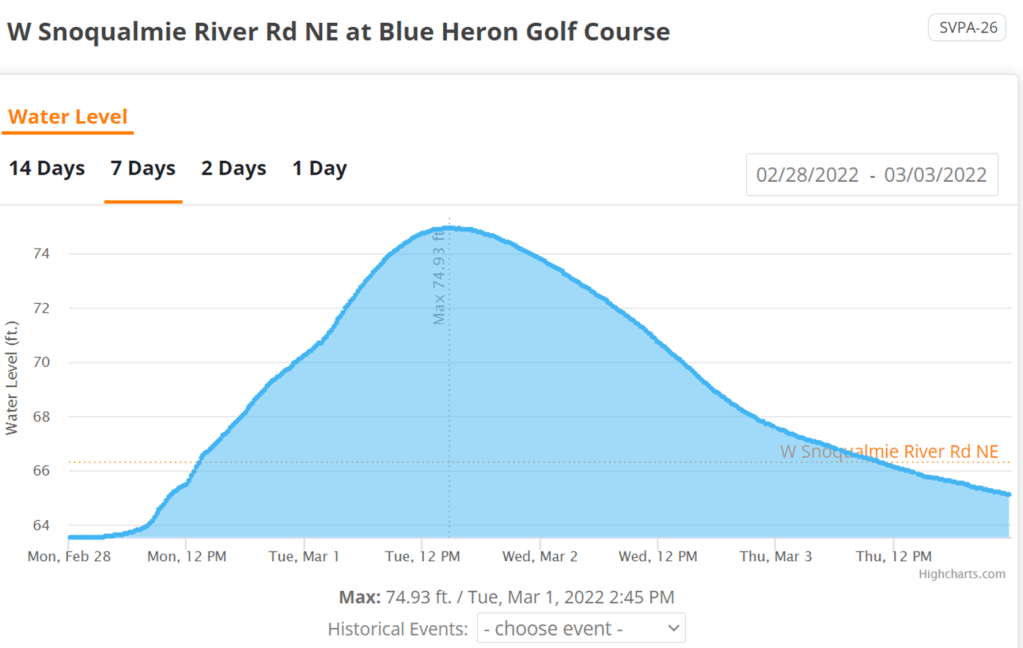
Since there is no internet access on the farm, we were unable to get real-time updates so all we could do was worry. We knew the area was flooded because the streets accessing the farm were closed. But we had questions:
- How deep is the water around the apiary?
- Will the 4×4 posts hold the apiary in place, or would the current be too strong? Perhaps we’d find the apiary had floated down the road.
- Would there be tree limbs or other debris stuck under the floats, causing the apiary to come down crooked?
- If there is a log under the apiary, how would we remove it while the ground was saturated?
- Would the apiary wobble when it floated since the weight of the hives were not equally distributed? Will the hives tumble over?
Anyway, we worried.
After the rain stopped and the river subsided, we headed to the apiary. Dirt and gravel littered the roads.
We parked the car at the top of the lane then walked the rest of the way down the path so the car wouldn’t get stuck in the soppy mud. Everywhere I looked and as far as I could see, there was clear evidence of flooding — grasses were pushed over by the once flowing water. But, the apiary looked fine, almost as if nothing at all happened.
Whew! Cool! It worked. I wish I could have seen the apiary float !
Floating Hives – the Wild Sprout “Arc”
And, here is where our solar powered wildlife camera came in handy. The camera had been set up to take a picture on the hour, every hour. The pictures were stored on a removable SD card, which had to be manually collected (again, no internet to retrieve remotely). Over the years, I looked at the pictures only occasionally because they were pretty boring, except for a deer or two snacking on nearby apples. But this time, maybe there would be an interesting surprise.
I sifted through over 3,000 photos that had been captured over the five months of winter. I finally found evidence of the flood, and of our floating apiary.
Using Movie Maker, I stitched together a few of the still shots to help us see the flood in action. While the picture quality isn’t the best, it clearly shows the rising waters. The apiary, ever so gracefully, floats up; the water appears to be about two-feet deep. Then as the water subsides, the apiary is gently placed back on solid ground.
(Note: this is youtube embedded. Youtube may require you to sign in to view. If you have issues, you can go directly to youtube here: https://youtu.be/V2ggjZiG4YA)
No debris under the apiary. Nothing out of balance. No damage to the hives. Just healthy, happy bees in their hives.
Without our floating apiary, we would have lost at least $2500 in equipment and bees. Plus, because the bees survived the winter, we’d start the next beekeeping season ahead of the game. The floating apiary was definitely worth the investment.
And to confirm, yes, this year, bees at this apiary survived far better than our bees at our Bellevue farm. Because the bee stock, beekeeping practices, and the beekeeper were the same in both apiaries, it appears that the location of the apiary makes a significant difference in overwintering bees. I’ll document some thoughts about this in a separate post.
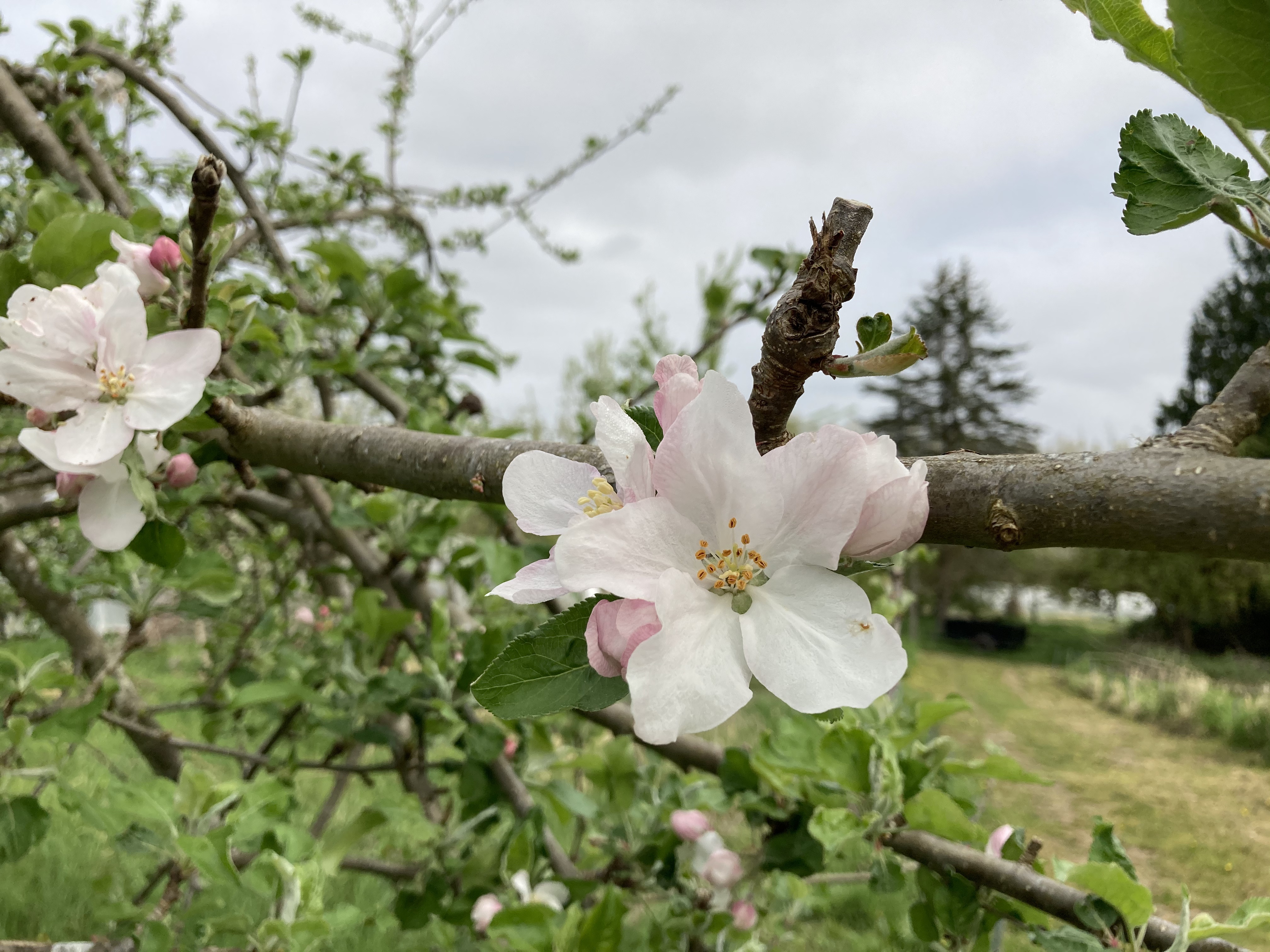
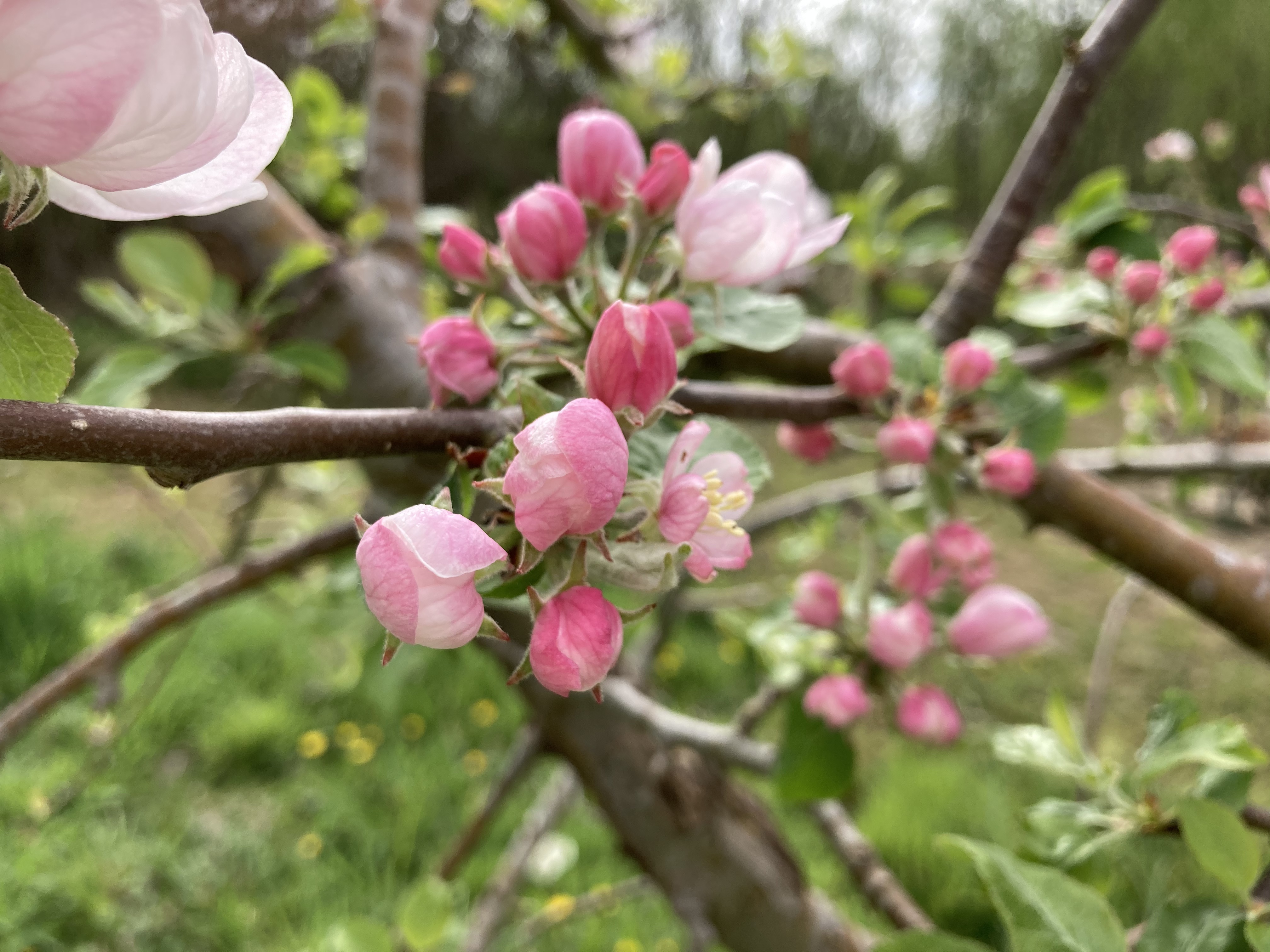
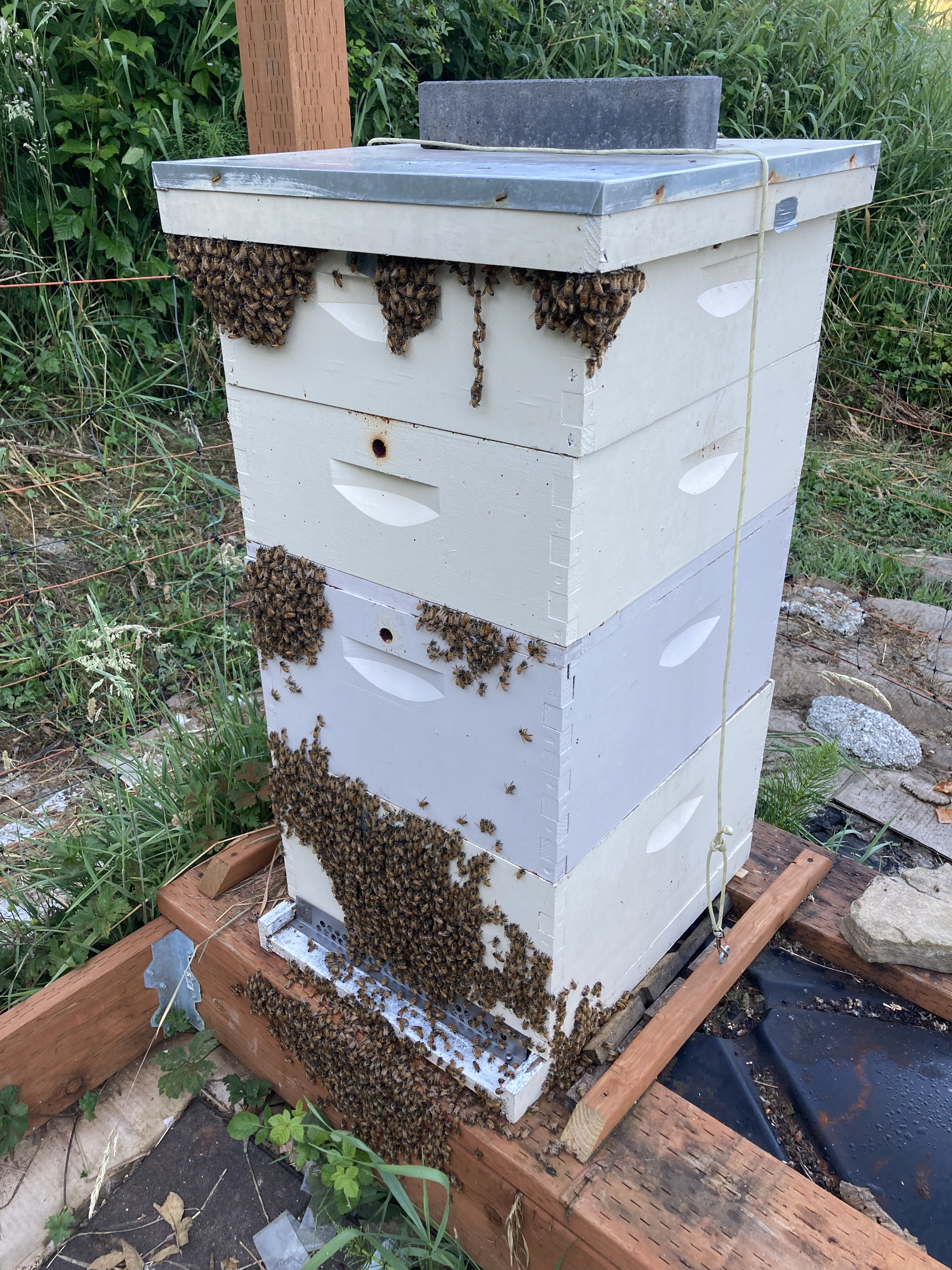
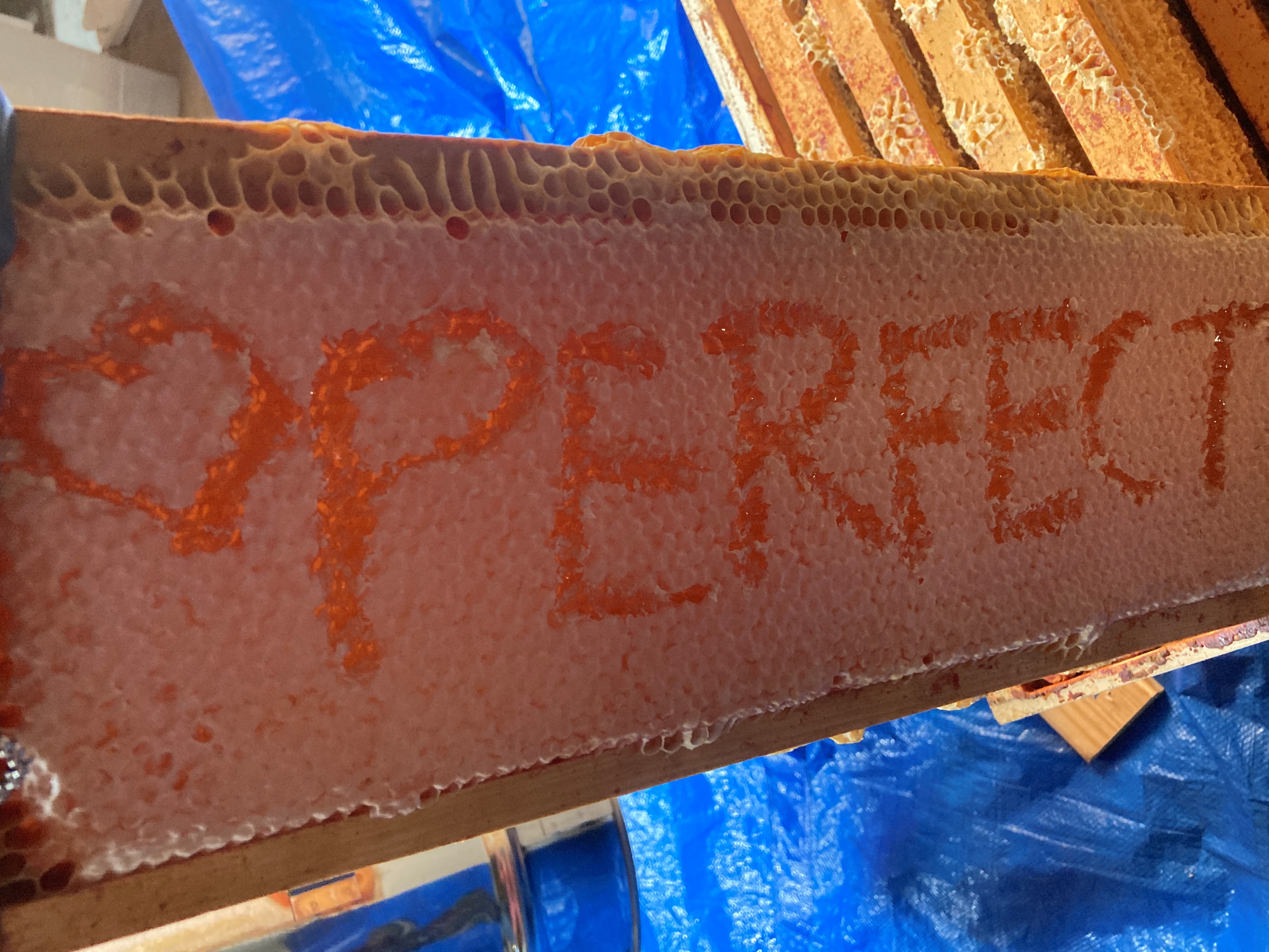
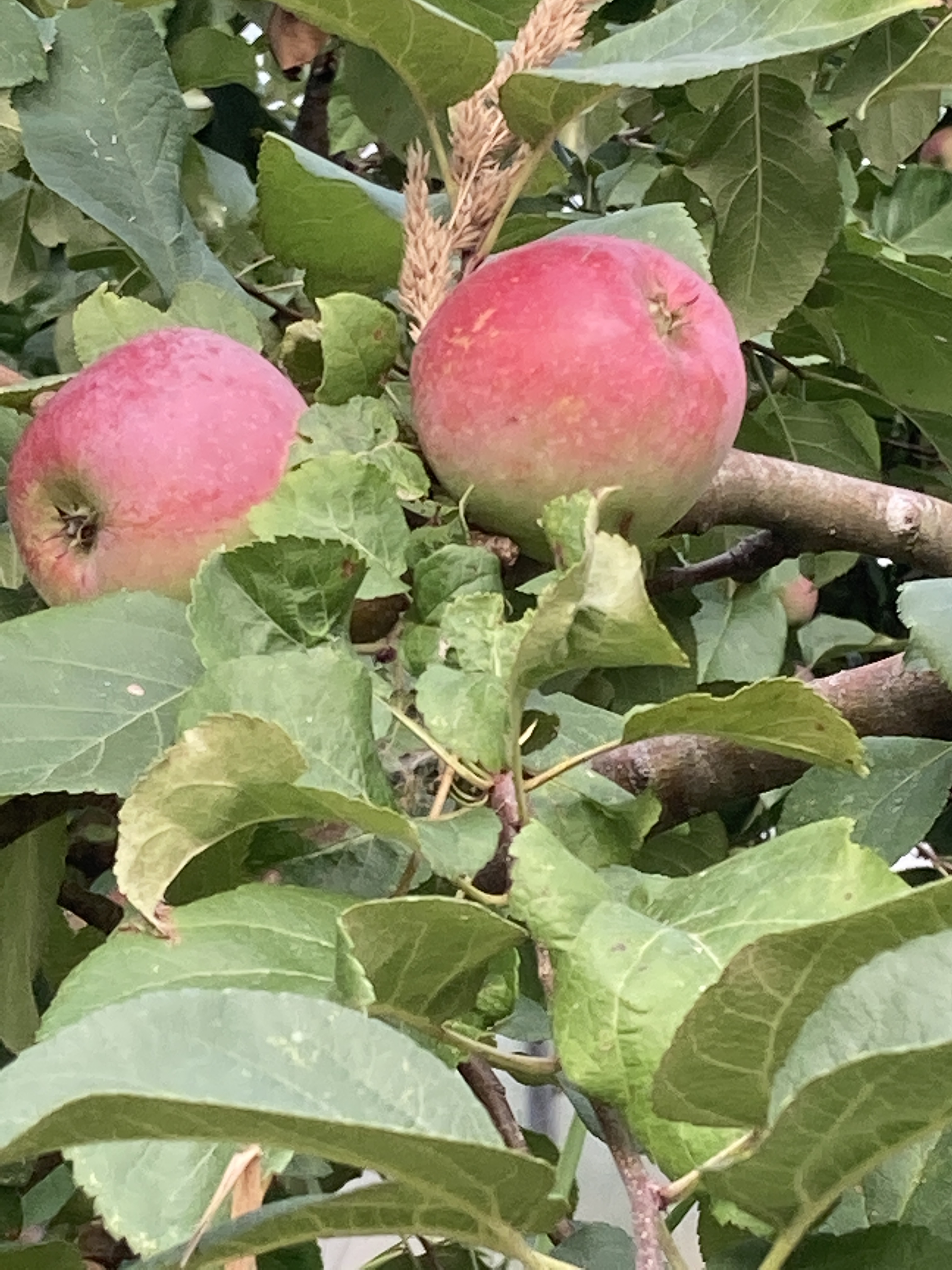
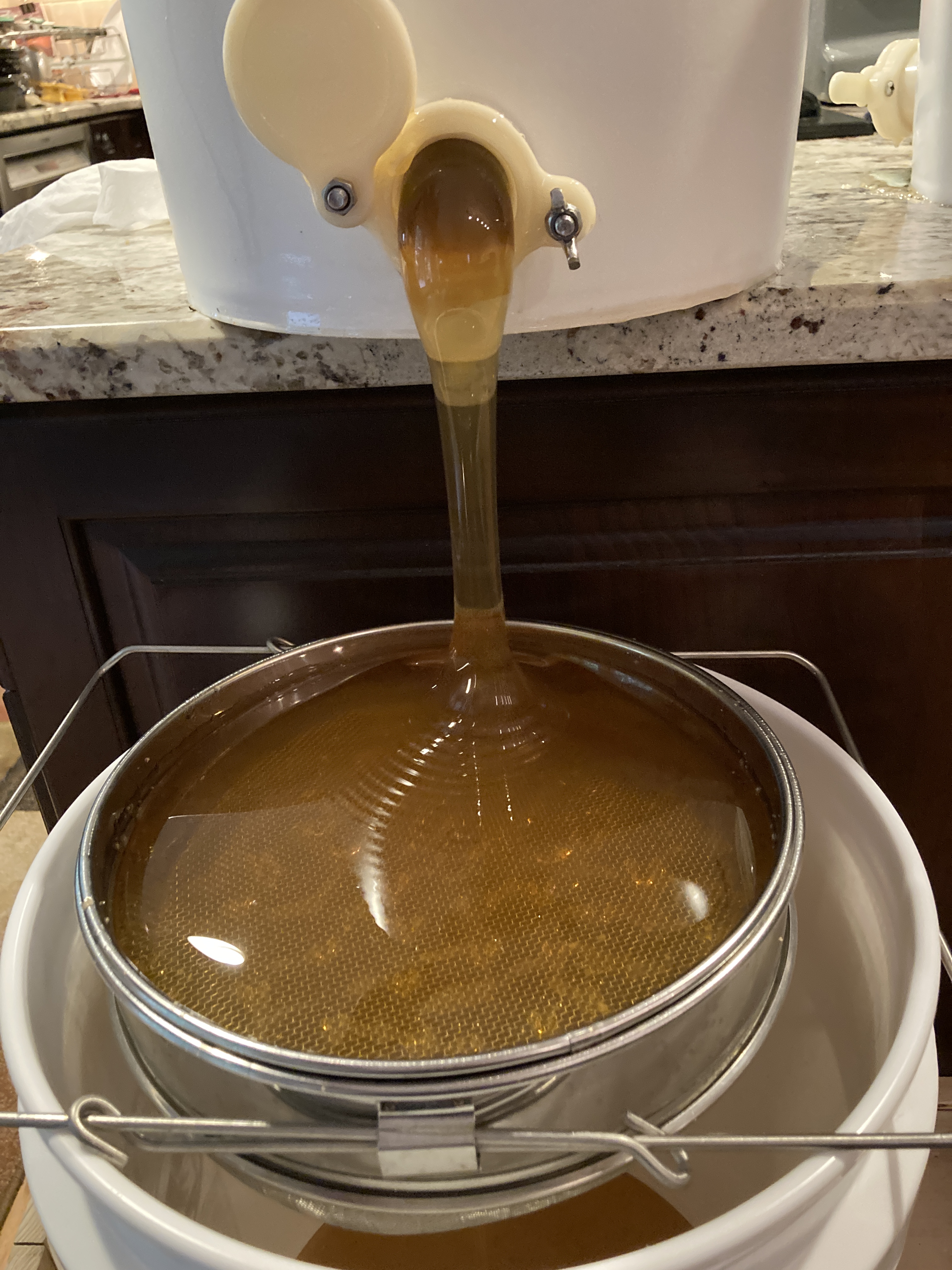
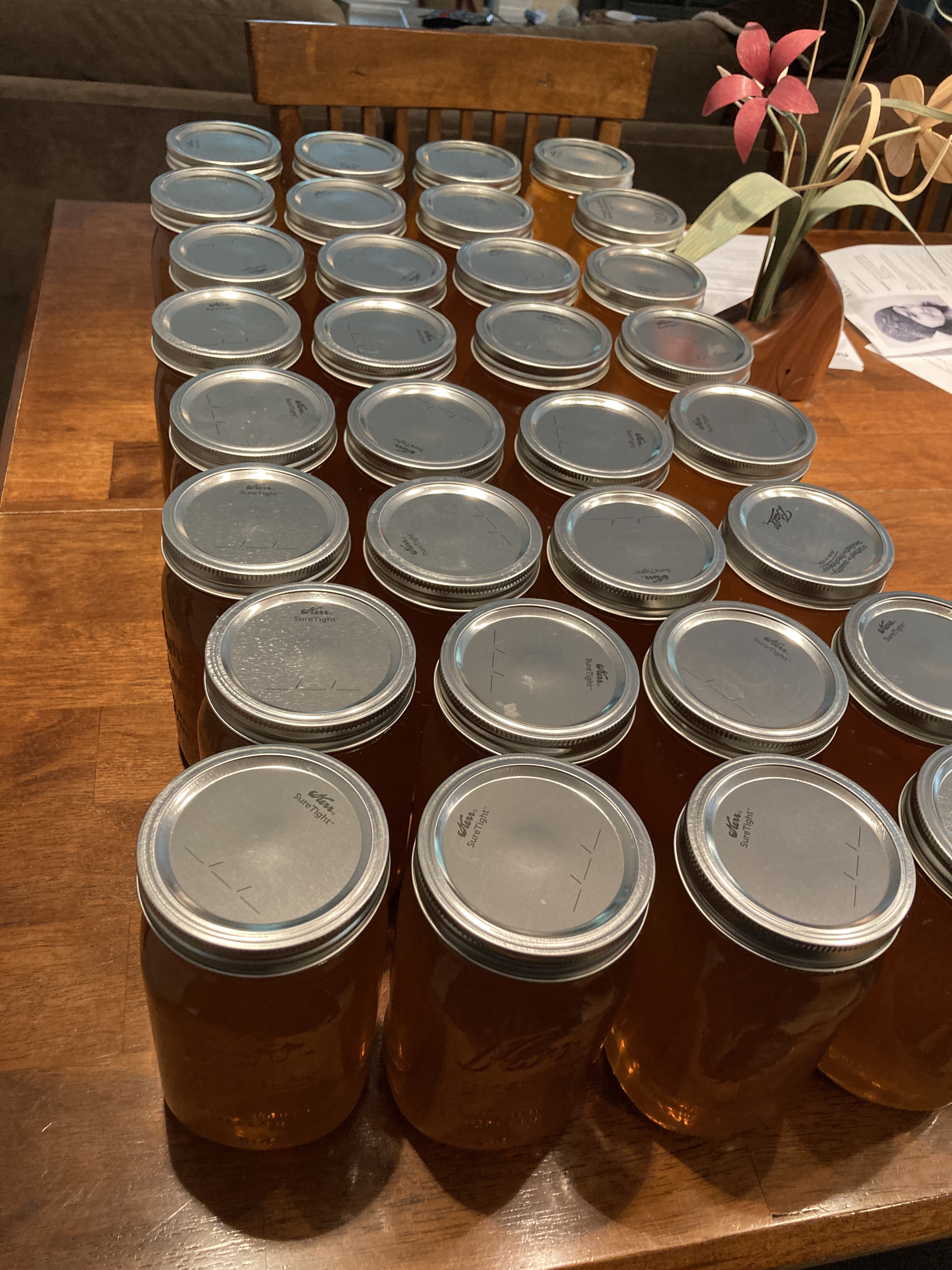
To conclude, I’m sharing a few pictures showcasing the beautiful farm in the Snoqualmie Valley, our bees, and our delicious honey.
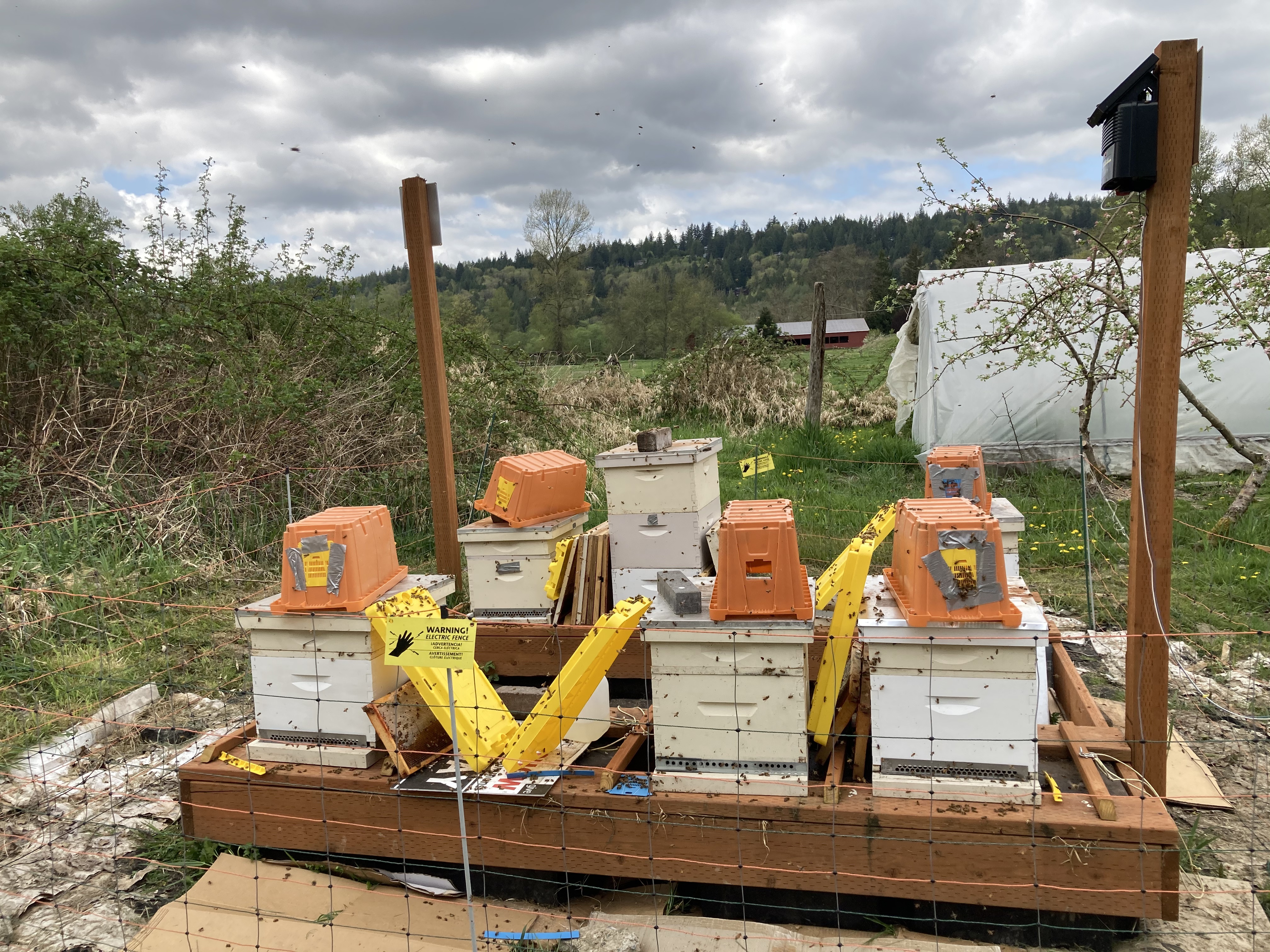
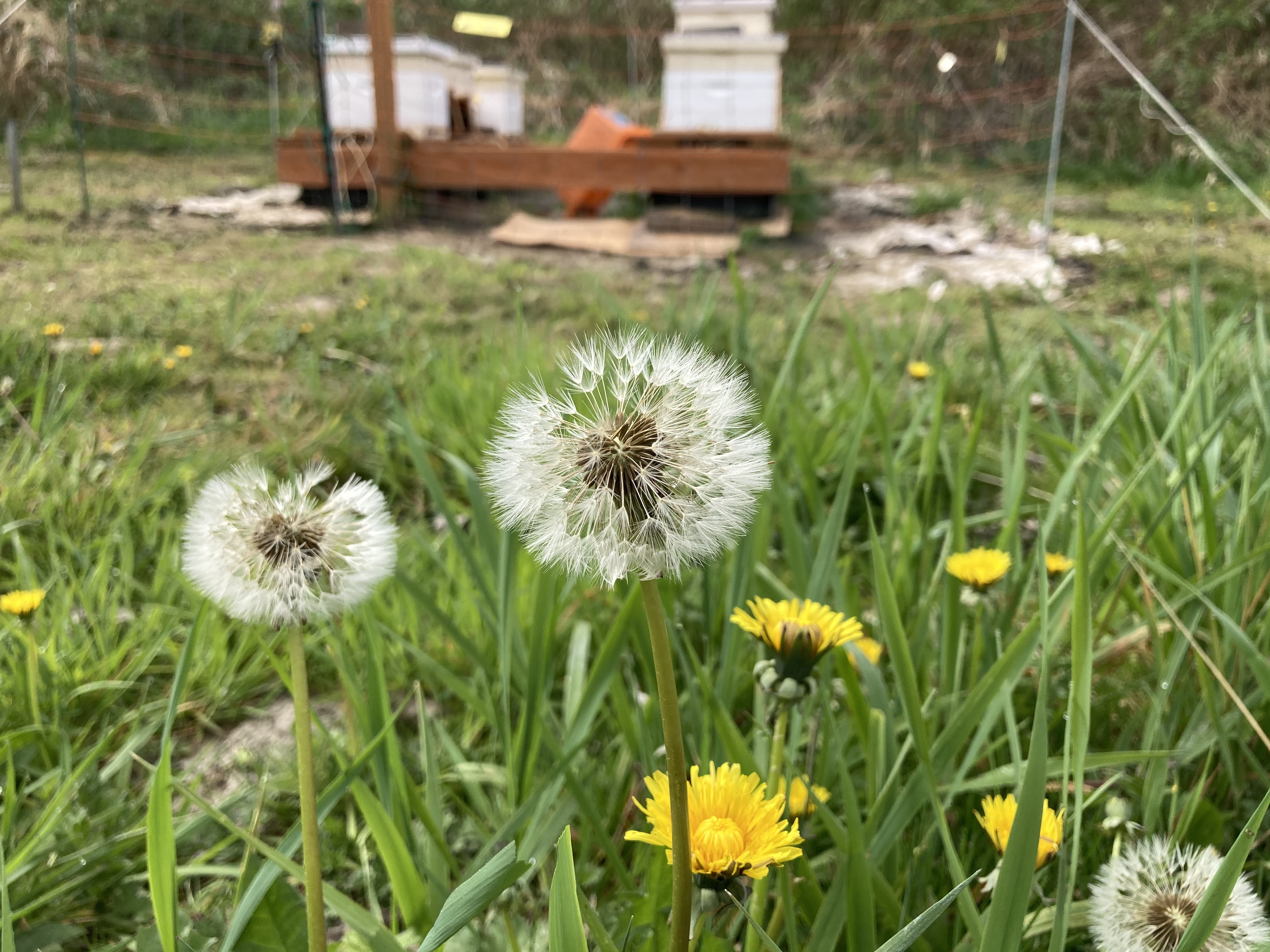
Here’s to more “bee-utiful” innovations. 🩵🐝💙
#beekeeping #washington #pugetsound #floatingapiary

 wild sprout
One Comment
Comments are closed.