
Pollinator Chart
Here are our primary pollinators, along with my attempt to describe the differences of what is generally referred to as “bees.” Actually, we have bees and wasps in our farm helping us with the crop.
| Common Name | Honey Bee | Bumble Bee | Yellow Jacket (wasp) | Bald-faced Hornet (wasp) |
| Scientific Name | Apis Mellifera | Bombus vosnesenskii (yellow-face) | Vespula vularis | Dolichovespula maculata |
| Image |
|
|
|
|
| Appearance | Short, thick body covered with hair. Delicate wings, most often yellow dominates black stripes | Fuzzy (almost fluffy) insects with short, stubby wings | Long and thin, dangling legs, two pairs of long thin wings. Smooth body and legs | Black with ivory pattern lines. Queen is hairless; workers appear to have smooth body and legs |
| Size | 9 mm to 20 mm | 9 mm to 18 mm | 12mm to 16 mm | Adult: ¾ inch; 12mm to 20 mm |
| Legs | Flat and wide | Flat and wide | Round and waxy | wiry |
| Abdomen & thorax | Round | Round/bulbous | Cylindrical | Long and narrow |
| Kingdom | Animalia | Animalia | Animalia | Animalia |
| Phylum | Arthropoda | Arthropoda | Arthropoda | Arthropoda |
| Class | Insecta | Insecta | Insecta | Insecta |
| Order | Hymenoptera | Hymenoptera | Hymenoptera | Hymenoptera |
| Family | Apidae | Apidae | Vespidae | Vespidae |
| Genus | Apis | Bombus | Vespula | Dolichvespula |
| Species | Mellifera | ternarius | Vulgaris | maculata |
| Aggressiveness | Honey bees are social and generally considered mild-tempered | Generally considered mild tempered | Aggressive | Aggressive |
| Feeding | Pollen and nectar | Pollen and nectar | Omnivorous. Varies among species, includes nectar and fruit or flowers; preyed or scavenged insects | |
| Nesting | Hexagonal wax comb, built buy workers. Hive generally in tree hollows or rock gaps/holes | Queen builds wax cells clustered (not hexagonal like honey bees). Hive generally close to ground under piles of wood, dead leaves; nest lined with honeypots | Paper-like nest. Usually outside in trees, shrubs, or under eves and decks | Paper-like nest. Aerial nest up to 10 inches (or larger) in diameter |
| Colony size | 20000 – 80000 individuals | 50 to 500 individuals | 2000-4000 individuals | 400 individuals |
| Eggs | Laid in comb; fed by nurse bees first with royal jelly and then honey and pollen (bee bread) | Laid in comb; fed by queen initially, then workers take over | Laid in comb; queen feeds shredded insects | |
| Sting | Barbed stingers | Barbless stingers, repeat stings | Barbless stingers, repeat stings | |
| Favorite flowers (observed) | Thyme, raspberries, radish, oregano, sweet mint, mustard, sun flowers, cosmos, clover | Marionberries, raspberries | Observed beginning mid-August hovering under honey bee hives; not observed on any flower/blossom | Observed beginning mid-August primarily on raspberries. They did not seem to bother honey bees however the one-and-only- picture I have is one sneaking into our weak hive |
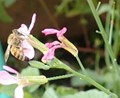
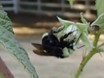
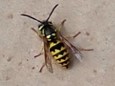

It’s hard taking pictures of bees. Perhaps that’s obvious to everyone, but now I really know it. I need to work on taking more pictures of pollinators other than honey bees.
Guest Appearances — Help me identify
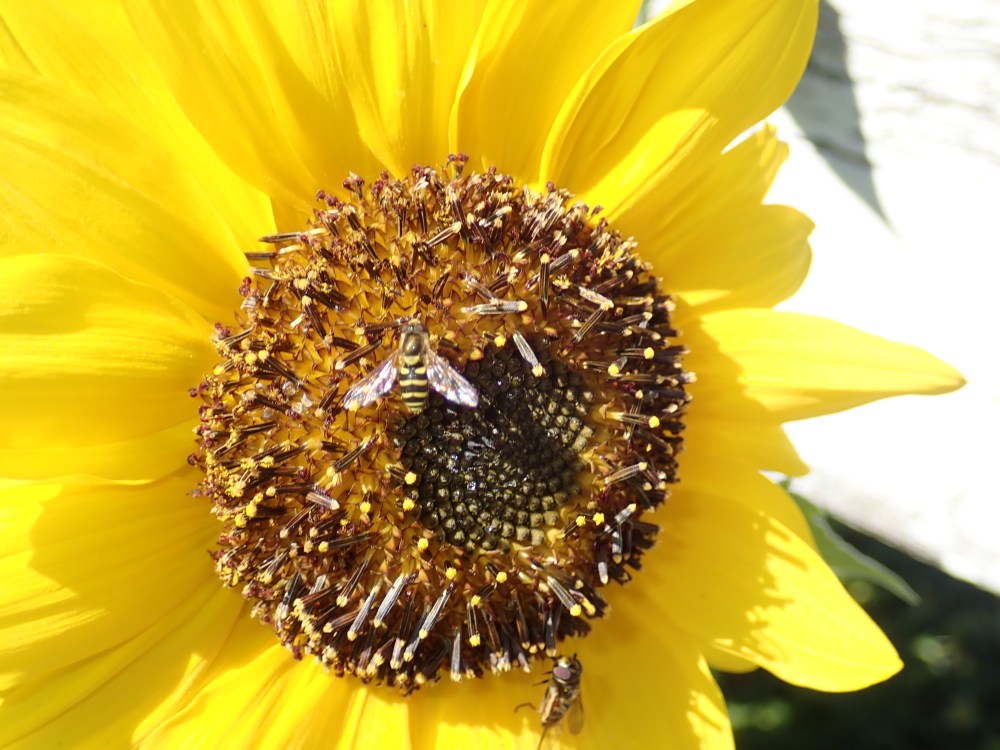
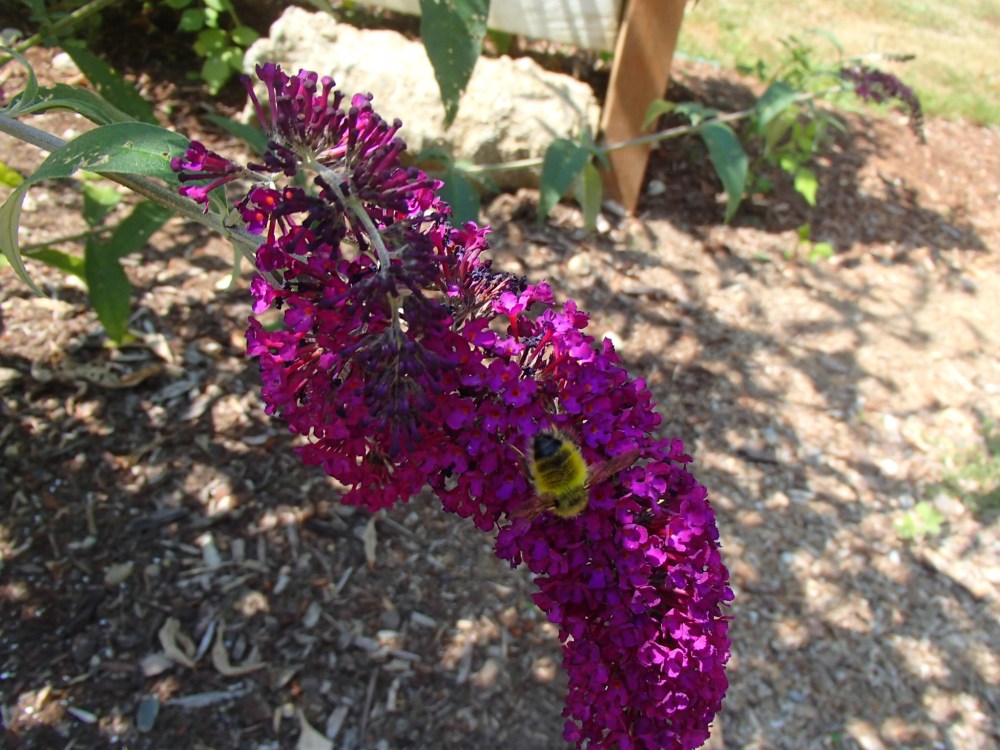
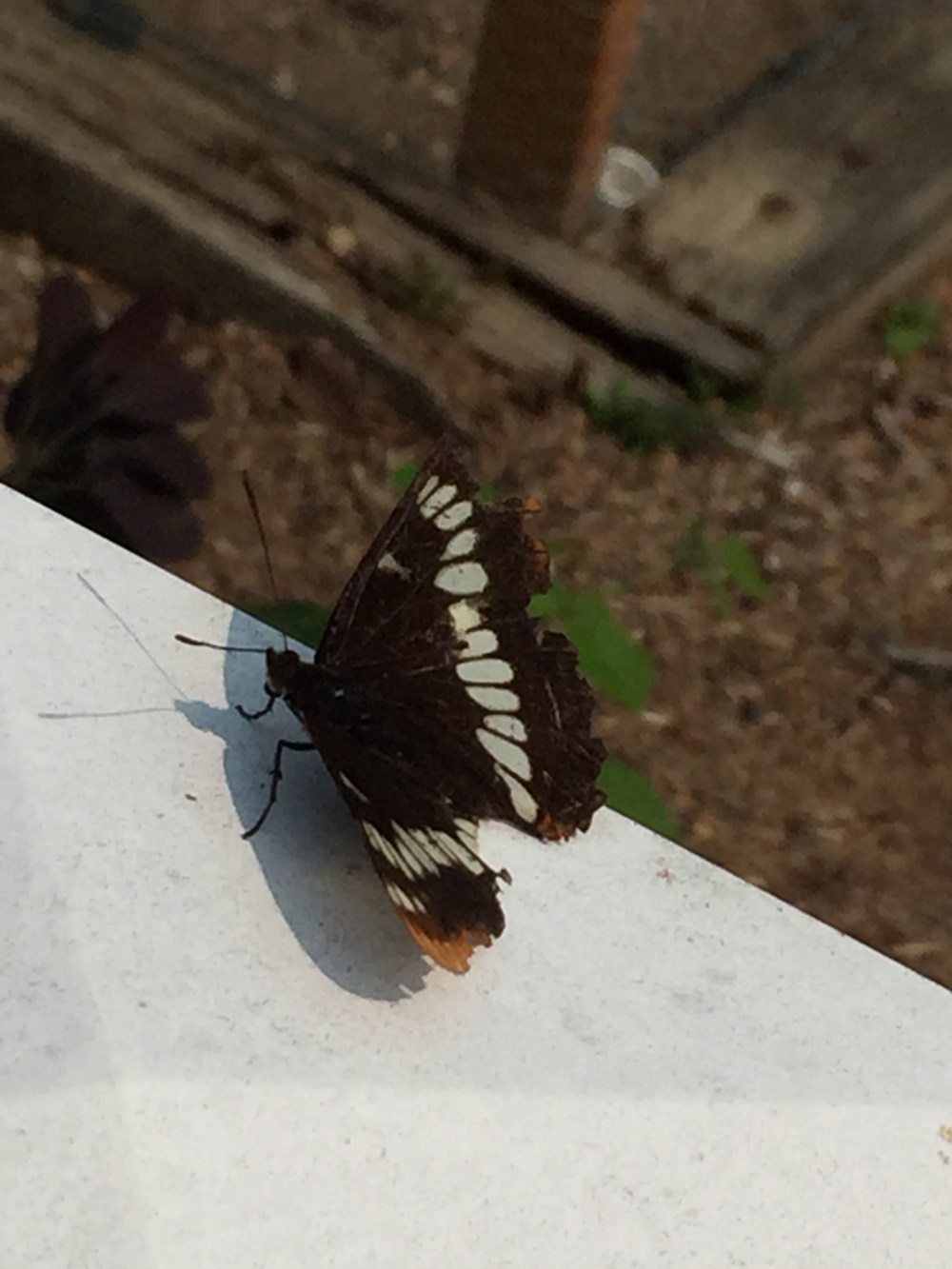

 wild sprout
You must be logged in to post a comment.